Waka Waka vs The Cup of Life: The Ultimate Battle for Football’s Greatest Anthem

As we watch the drama of the 2026 World Cup unfold across North America, our ears are being bombarded by a whole new sonic landscape. FIFA just dropped an incredibly ambitious, star-studded soundtrack this summer, headlined by Shakira and Burna Boy’s genre-blending bop “Dai Dai”, and backed by David Guetta and Andrea Bocelli’s sweeping anthem “DNA”.
It is an absolute feast for the ears. But let’s be entirely real for a second, every time a new tournament rolls around, it triggers the exact same fierce, alcohol-fueled debate in bars and fan zones globally: What is the single greatest World Cup song of all time?
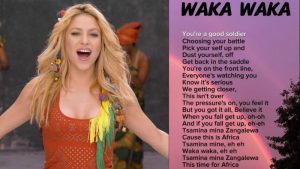
While there have been dozens of official tracks over the decades, the conversation always inevitably boils down to a heavyweight title fight between two legendary pop-cultural earthquakes: Ricky Martin’s “The Cup of Life” (1998) and Shakira’s “Waka Waka (This Time for Africa)” (2010).
The Anatomy of a Global Earworm
To understand why these two specific tracks became immortal while other multi-million dollar FIFA anthems were forgotten by the time the group stages ended, we have to look at the musical psychology behind them.
A true World Cup anthem cannot just be a good radio song; it has to function as a sonic tribal chant. It needs to make a fan from Tokyo, a supporter from Buenos Aires, and a casual viewer in New York feel the exact same shot of pure, unadulterated adrenaline.
“The Cup of Life” (or La Copa de la Vida) mastered this by weaponizing the absolute best of late-90s Latin pop production. It is driven by a thunderous, carnival-style horn section and an aggressively simple, call-and-response chorus: “Ale, Ale, Ale!” It didn’t matter if you didn’t speak a single word of Spanish or English. The moment those trumpets blasted, your brain instantly translated it into: It is time to fight for glory.
Shakira, on the other hand, caught lightning in a bottle in 2010 by grounding “Waka Waka” in authentic Afro-Colombian rhythms, interpolating the classic Cameroonian song “Zangalewa”. From a structural standpoint, the song is a masterpiece of tension and release. The verses build up a sense of heavy, emotional struggle, only to explode into a joyous, dancing celebration during the chorus.
Why They Transcended Borders
From a personal perspective, the real reason these songs became the definitive soundtracks to our collective football memories is that they capture the true ethos of the sport: beautiful, chaotic unity. Most modern pop songs are hyper-individualistic, they are about my heartbreak, my money, or my lifestyle. A great World Cup song requires total ego death. It has to belong to everyone simultaneously.
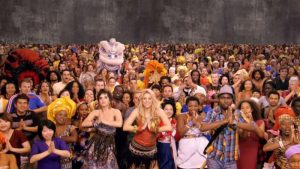
When Ricky Martin commanded the stage at France ’98, he wasn’t just performing; he was leading a global rally. Similarly, “Waka Waka” became an anthem for an entire continent, symbolizing Africa’s historic moment hosting the world.
The lyrics – “When you fall get up, oh oh / If you fall get up, eh eh” – are so beautifully simple that a five-year-old kid kicking a ball in a dusty street can sing them with the exact same passion as a professional athlete walking out of a stadium tunnel. They are anthems built for the collective human spirit, completely stripped of pretense.
The Verdict for the Ages
So, where does the crown land? If you poll the purists who grew up watching Zinedine Zidane glide across the pitch in 1998, “The Cup of Life” remains the blueprint. It was the track that proved a football song could become a legitimate, chart-topping global pop phenomenon. It brought theatrical, stadium-sized energy into the mainstream.
However, if we are measuring sheer cultural longevity, digital metrics, and multi-generational impact, Shakira’s “Waka Waka” edges out as the ultimate champion. It is a song that fundamentally refuses to die. Even now, sixteen years after its release, it still generates hundreds of millions of streams every single summer. It is the gold standard that every artist, including Shakira herself with this year’s “Dai Dai”, is constantly trying to replicate.
While the new tracks of 2026 are busy dominating our TikTok feeds and filling up our summer playlists with fresh, modern vibes, they are all ultimately swimming in the wake of the giants. Ricky gave us the stadium chant, Shakira gave us the global dance, and together, they wrote the permanent musical language of the beautiful game.