The Recycling of Our Digital Past: Are Video Game Remakes True Preservation or Financial Panic?

If you were to take a casual stroll through the digital storefronts of Steam, PlayStation Network, or the Nintendo eShop today, you would be forgiven for feeling a profound sense of déjà vu. The industry’s release calendar looks remarkably similar to a retail catalog from fifteen or twenty years ago. Everywhere you look, the ghosts of gaming’s past have been unearthed, polished, and repackaged for modern consumption.
Among the most discussed catalysts of this discussion are the ambitious rebirth of the cult PC classic Gothic 1 Remake and Ubisoft’s high-profile revisit to the Caribbean in Assassin’s Creed: Black Flag Resynced.
To the optimistic enthusiast, this phenomenon is celebrated as a golden era of cultural preservation to rescue interactive art from the graveyard of obsolete hardware. But to the weathered industry analyst, a much more cynical, systemic reality emerges beneath the surface.
When you peek behind the curtain of soaring budgets, mass studio layoffs, and corporate risk aversion, the boom looks less like a museum curation and more like an industry-wide emergency response.
The question must be asked with brutal honesty: Is this a genuine effort to safeguard gaming history, or is it the undeniable sound of corporate financial panic?
The Preservation Argument: The Fight Against Digital Decay
To understand why a remake can be an act of profound cultural necessity, one must first look at the unique, tragic nature of video game preservation. Unlike literature, film, or music, video games are inherently shackled to the physical and digital architecture of the eras in which they were born.
If you want to watch a film masterpiece from 1930, you can stream a digitized version on a modern screen with the click of a button. If you want to read a book published in 1850, the text translates perfectly to paper or an e-reader. But if you want to play a video game masterpiece from 2001, you are entering a mechanical minefield.
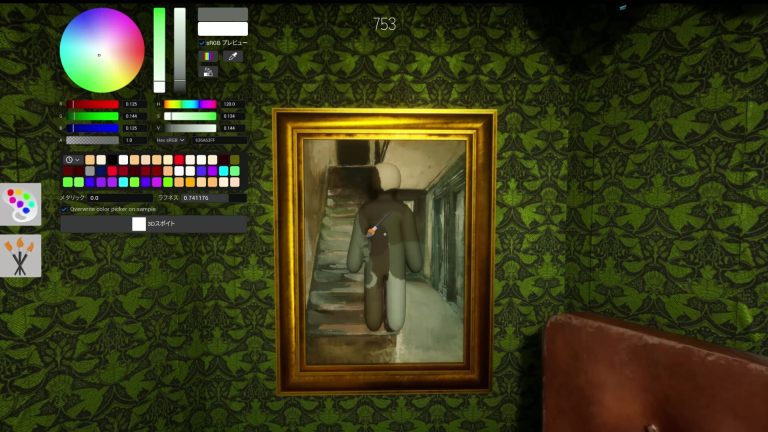
Take the original Gothic, released by Piranha Bytes in 2001. In its day, it was a revolution in open-world design, featuring a brutal, living ecosystem where NPCs went to work, slept, reacted to the weather, and beat you senseless if you walked into the wrong camp without an invitation. It was a masterpiece of European RPG design.
However, trying to experience the original Gothic today on a modern Windows 11 PC running a high-refresh-rate monitor is an absolute nightmare. The game regularly crashes without custom, fan-made community patches. The source code is an archaic web of proprietary scripts. The controls—which famously relied entirely on the keyboard without native mouse look—feel alien and borderline unplayable to a generation raised on modern design conventions.
For a game like Gothic, a ground-up remake in Unreal Engine 5 is not an act of lazy recycling. It is a vital act of cultural archeology. By completely rebuilding the game’s geometry, updating the input tracking, and re-recording the voice acting while maintaining the exact, uncompromising layout of the Valley of Mines, the developers are performing an essential translation.
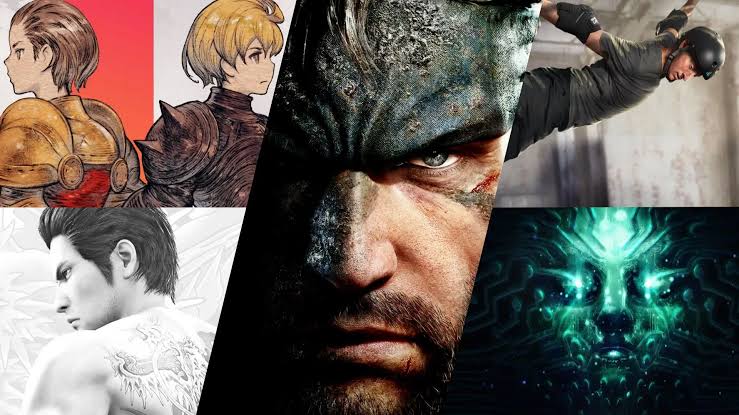
They are taking a crumbling, inaccessible monument of gaming history and rendering it readable for the modern world. Without these expensive undertakings, landmark achievements in interactive storytelling will simply fade into historical footnotes, remembered only by aging players and YouTube retrospectives.
The Executive Blueprint: Why Remakes are the Ultimate Corporate Safety Net
While the developers on the ground floor are often driven by a genuine love for preservation, the executives greenlighting the multi-million-dollar budgets are operating on a completely different wavelength. To understand their motivations, we have to look at the terrifying macroeconomic realities facing the AAA gaming sector.
Over the last decade, the cost of producing a premier video game has spiraled into an unsustainable stratosphere. Today, a major blockbuster routinely requires a development budget of $200 million to $300 million, a timeline of six to eight years, and a marketing spend that equals the production cost. Under this hyper-inflated model, a single commercial failure doesn’t just mean a bad fiscal quarter; it can trigger immediate mass layoffs, executive restructuring, or the complete closure of a legacy studio.
When the stakes are that high, creative courage vanishes from the boardroom. Publishers completely stop looking for the next boundary-pushing, unproven intellectual property. Instead, they look for a mathematical guarantee of a return on investment.
This is exactly why projects like Assassin’s Creed: Black Flag Resynced exist.
Black Flag is universally adored. When it originally launched, its brilliant synthesis of traditional stealth and open-seas pirate warfare revitalized a fatigued franchise. But unlike Gothic, Black Flag is not a lost relic. It was a cross-generation title that remains perfectly playable on most modern platforms via backward compatibility. It didn’t need a preservation rescue mission.
Instead, Black Flag Resynced exists because it represents the ultimate corporate safety net, ticking every single box on a risk-management spreadsheet:
| Corporate Metric | The AAA New IP Risk | The Remake Safety Net |
| Market Testing | Completely unproven; relies on unpredictable player tastes. | Built-in, multi-million-member global fanbase guaranteed to buy day one. |
| Pre-Production Phase | Years spent figuring out the story, tone, and what makes the game fun. | The blueprint is already written; designers simply follow a pre-existing map. |
| Marketing Hook | Requires hundreds of millions to educate consumers on a new world. | Nostalgia does the heavy lifting for free; childhood memory is an unbeatable weapon. |
| Development Pipeline | Prone to feature creep, developmental hell, and indefinite delays. | Highly predictable production pipeline focused primarily on asset generation. |
When an industry discovers a formula that minimizes financial risk while maximizing nostalgia-driven revenue, it will exploit that formula until the well runs dry. The remake boom is a structural defense mechanism against a bloated market model that has grown far too expensive to dare to fail.
The Dangerous Side Effect: The Stagnation of the Creative Funnel
If remakes satisfy the historical urges of players and the financial needs of publishers, it would seem like a win-win scenario. However, this corporate symbiosis carries a profound, long-term cost that is quietly starving the future of the medium: opportunity cost.
Every veteran studio, brilliant creative director, and talented environment artist assigned to re-texture a fifteen-year-old pirate ship or redesign a twenty-year-old dungeon is a creative force that is fundamentally blocked from inventing the future.
Consider the cyclical irony of this situation. If the gaming industry of the late 1990s and early 2000s had been as paralyzingly risk-averse as the industry is today, the original Gothic would have never been funded.
Executives would have looked at Piranha Bytes’ weird, difficult pitch and said, “It’s safer to just remaster an old isometric RPG.” If Ubisoft had refused to take a massive creative gamble, the original Assassin’s Creed—a bizarre, historically dense sci-fi experiment about genetic memory and the Crusades—would have been discarded in favor of playing it safe.
By over-allocating hundreds of millions of dollars to structural remakes, the industry is eating its own seed corn. It is relying entirely on the creative breakthroughs of a bolder, past generation to sustain its current financial model. This creates a dangerous cultural stagnation where we are no longer creating new core memories; we are simply up-scaling our old ones. The industry risks trapping itself in an infinite loop of nostalgic iteration, leaving a generation of younger players without unique, groundbreaking franchises to call their own.
The Mechanics of Nostalgia: How Remakes Alter Our Memory
There is also a fascinating psychological component to the modern remake that complicates the preservation argument. A truly successful remake doesn’t actually preserve the game as it literally was; it preserves the game as you remember it through the rose-tinted glasses of childhood.
If you were to look at a side-by-side technical comparison of a classic game and its 2026 remake, the visual and mechanical differences are staggering. The original developers were working with severe hardware constraints, forcing them to use fog to hide low draw distances, low-polygon models that lacked facial expressions, and rigid animations.
A modern remake utilizes cutting-edge lighting, global illumination, and high-fidelity performance capture to fill in the blanks that your childhood imagination used to handle. When you play a modern iteration, your brain tells you, “Yes, this is exactly how it always looked,” even though the new version is thousands of times more complex than the original source material.
This creates a strange paradox where the remake actually replaces the original artifact in the collective cultural consciousness. The historical reality is erased and substituted with a polished, retroactive revision. While this makes for a vastly more entertaining consumer product, it is fundamentally distinct from true preservation. True preservation honors the limitations, quirks, and historical context of the original era. A modern remake, by contrast, sanitizes those historical friction points to ensure the game conforms to modern, streamlined market expectations.
The Verdict: A Fragmented Industry Clinging to the Past
Ultimately, trying to categorize the modern remake phenomenon as strictly true preservation or purely financial panic is an oversimplification of a complex, fragmented ecosystem. The reality is that the remake boom is both concepts operating in perfect, cynical harmony.
For the passionate development teams, software engineers, and historical enthusiasts, a project like Gothic is a genuine labor of love—a vital opportunity to keep a foundational piece of interactive art breathing in a rapidly changing digital landscape. It is an act of preservation that respects the roots of the medium.
But for the corporate entities, parent companies, and institutional shareholders who control the capital, projects like Assassin’s Creed: Black Flag Resynced are an undeniable manifestation of financial panic. They are the defensive maneuvers of a risk-averse corporate hierarchy that has built an unsustainable financial ecosystem and is now entirely terrified of the creative unknown.
As we look toward the future, the industry cannot survive on nostalgia alone. While there will always be immense value in restoring the absolute masterpieces of our past, a healthy creative ecosystem must find a way to re-balance the scales. Publishers must find a way to lower development costs, embrace mid-budget experimentation, and allow creators to take the kind of wild, unpredictable risks that gave us our favorite classics in the first place.
Until that systemic shift happens, the video game industry will remain beautifully, tragically haunted by its own history—clinging firmly to the shorelines of past triumphs because it has grown too expensive to sail into uncharted waters.