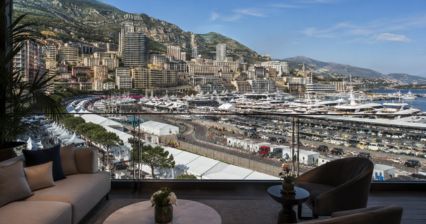
Inside the Ultra Light and Absurdly Expensive World of Tennis Haute Horlogerie

When you think of the physical demands of elite tennis, your mind instantly goes to the blistering 140 mph serves, the brutal lateral slides on clay, and the chaotic, high-impact vibrations that travel up a player’s arm with every single baseline return. It is an environment of pure, unadulterated velocity.
Naturally, any traditional watchmaker would tell you that wearing a delicate, multi-million dollar mechanical timepiece in the middle of such a battlefield is a recipe for instant financial and engineering disaster.
Yet, if you look closely at the wrists of the world’s tennis royalty today, you are not seeing basic smartwatches or rugged fitness trackers. You are witnessing some of the most expensive, highly complicated horological masterpieces ever created.
The modern tennis court has quietly evolved into the ultimate luxury flex zone. It is a high-stakes theater where elite sports performance collides directly with haute horlogerie, turning the traditional boundaries of what a luxury watch can withstand completely on its head.
The Eleven Gram Miracle Defying the Laws of Physics
To understand how this luxury obsession began, you have to look at the legendary, decade-long partnership between the “King of Clay” Rafael Nadal and the Swiss avant-garde watchmaker Richard Mille.
For years, the general public assumed that athletes only wore luxury watches before and after a match, flashing them politely for the cameras during the trophy ceremony. But Nadal shattered that script by insisting on wearing his mechanical watches during live, Grand Slam gameplay.
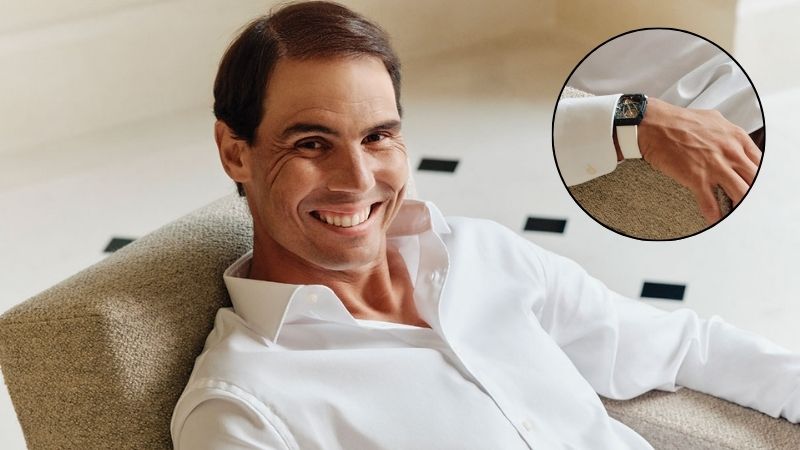
The absolute pinnacle of this partnership is the mythical Richard Mille RM 27-05 Flying Tourbillon Rafael Nadal. Valued at an astronomical $1.15 million USD and strictly limited to just 80 pieces worldwide, this watch is an absolute miracle of modern materials science.
When you hold it, the sensation is completely disorienting because the entire mechanical movement, including the strap, weighs a mere 11.5 grams. It is lighter than a standard piece of printer paper, meaning players literally forget it is even on their wrist while executing a high-velocity forehand.
But the real magic isn’t the weight; it is the structural violence it can survive. The internal flying tourbillon movement is engineered to withstand an impossible 14,000 g’s of acceleration. To put that into perspective, human beings typically black out at around 9 g’s, and a space shuttle launch generates about 3 g’s.
The violent, snapping motion of a professional tennis serve would instantly shatter the delicate gears of a standard luxury watch into a million pieces. The RM 27-05 handles it like a casual afternoon stroll. It is high-end luxury re-engineered as armor.
The Changing of the Guard and the New Court Royalty
The million-dollar Richard Mille phenomenon set off a massive cultural domino effect across the sport. The new generation of tennis icons is no longer content with basic sponsorship deals; they want their wristwear to reflect their status as global style icons.
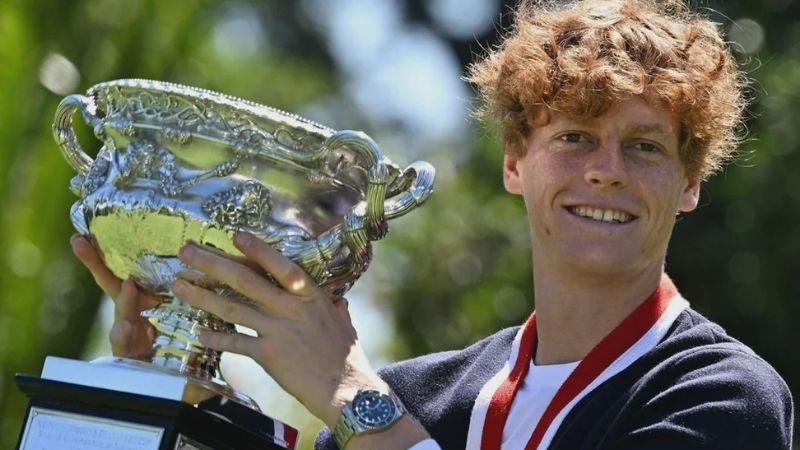
Look no further than the current world number one, Jannik Sinner. As a prominent ambassador for Rolex, Sinner has injected a classic, “Old Money” elegance back into the sport, regularly spotted sporting custom, lightweight variations of the Rolex Submariner and the Explorer II.
While Sinner brings the classic European sophistication, the women’s circuit is pushing the boundaries of contemporary streetwear integration. Naomi Osaka’s partnerships have frequently blurred the lines between high fashion and horology, introducing vibrant, limited-edition sports watches that feature avant-garde strap materials and bold, asymmetric colorways designed to pop on social media feeds.
This is where the true marketing genius lies. These timepieces are no longer just utilitarian tools to tell time, they are visual calling cards. When a broadcaster zooms in on a player wiping sweat from their forehead, that split-second frame of a luxury watch face delivers more cultural currency and brand visibility than a multi-million dollar billboard in Times Square ever could.
Why the Tech Billionaires Are Stealing the Look
Fascinatingly, the cultural gravity of these tennis-born watches has grown so powerful that it has completely escaped the boundaries of the stadium.
The trend has been completely hijacked by the world’s financial elite and tech billionaires who want to project an aura of active, high-performance luxury. Amazon founder Jeff Bezos has been spotted wearing the exact same ultra-rare Richard Mille Nadal models at high-profile gala events.
From a personal perspective, this cross-over makes perfect sense. In the modern landscape of wealth, wearing a heavy, gold, diamond-encrusted dress watch can sometimes feel outdated and ostentatious.
The contemporary elite prefer stealth luxury, items that look minimalist and industrial to the untrained eye but scream astronomical wealth to those in the know. A carbon-composite, feather-light tennis watch projects a very specific lifestyle: it says you are wealthy enough to afford a million-dollar timepiece, but active enough to appreciate the engineering required to keep it alive during a high-impact sport.
The Permanent Evolution of Sports Luxury
Ultimately, the phenomenon of hyper-expensive timepieces on the tennis court proves that the definition of luxury has permanently evolved. It is no longer enough for an object to simply be rare or made of precious metals; it must possess a narrative of survival and extreme performance.
As material technology continues to advance, the gap between haute horlogerie and athletic utility will only continue to shrink. The pristine grass courts of Wimbledon and the sun-drenched clay of Roland Garros are no longer just historical sports venues, they are the ultimate, unyielding testing grounds for the future of luxury design.
The next time you watch a grueling five-set thriller, don’t just watch the scoreboard. Keep your eyes on the wrists, because the real masterclass in power, wealth, and engineering is happening right there in real-time.