Why the Nintendo Switch Ecosystem Became the Ultimate Life Raft for Burnt Out Adults

There is an unspoken timeline that many lifelong gamers experience as they drift out of their early twenties and march into their thirties. In your youth, your relationship with video games is aggressive, competitive, and geographically fixed. You are perfectly content to spend four hours hunched over a glowing desktop monitor, veins pulsing with caffeine, screaming callouts into a headset while navigating a hyper-toxic ranked match in an online shooter.
Or perhaps you were the type to sit exactly three feet away from a massive television, eyes straining to process the photorealistic light refraction on a car bumper in a $300 million AAA cinematic blockbuster. Gaming was an optimization problem, an adrenaline chase, and a test of raw mechanical reflex.
But then, adult life catches up to you.
You spend eight to ten hours a day staring at spreadsheet matrices, answering emails, navigating corporate politics, and managing the slow, grinding existential dread of modern adulthood. You commute home or simply shut down your work laptop in your living room feeling a profound, systemic level of cognitive exhaustion. Your brain is entirely cooked.
You look across the room at your PlayStation 5, your Xbox Series X, or your high-end PC gaming rig. The sheer act of turning them on feels like a chore. You think about the mandatory 40-gigabyte system update waiting for you. You think about the complex, stressful button combinations you have to memorize, the bleak, depressing post-apocalyptic narrative you are supposed to wade through, or the hyper-fast reflexes required just to survive the opening level.
Instead of feeling a desire for conquest, you feel a wave of fatigue. You realize, with a sudden pang of clarity, that you do not want to fight a giant, terrifying boss that requires twenty attempts to defeat. You do not want to be yelled at by a teenager on the internet. You just want a soft place to land.
This exact psychological threshold is where Nintendo completely conquered the adult demographic. With the staggering, multi-generation success of the original hybrid hardware and the highly anticipated arrival of the upgraded Nintendo Switch 2 ecosystem, the Japanese gaming giant didn’t just build a successful console line—they manufactured an emotional sanctuary.
By prioritizing portability, tactile comfort, and becoming the undisputed premier destination for low-stress life simulators and hand-drawn indie masterpieces, the Switch ecosystem has transformed into the ultimate, non-negotiable life raft for a generation of profoundly burnt-out adults.
The Psychological Architecture of “Bed Gaming”
To understand the intense loyalty adults feel toward the Switch ecosystem, you have to look past the hardware specifications and analyze the physical and spatial psychology of how we decompress.
Traditional premium consoles enforce a rigid, behavioral posture. To play a high-end console game, you must sit upright in a specific chair, maintain a fixed line of sight with a stationary screen, and isolate yourself in a dedicated room. This configuration matches the spatial dynamics of a traditional workstation. To a brain that has spent the entire day sitting at a desk under fluorescent office lights, sitting at another desk or facing a massive, aggressive screen in the living room feels subconsciously like an extension of the labor cycle. It triggers the exact opposite of a relaxation response.
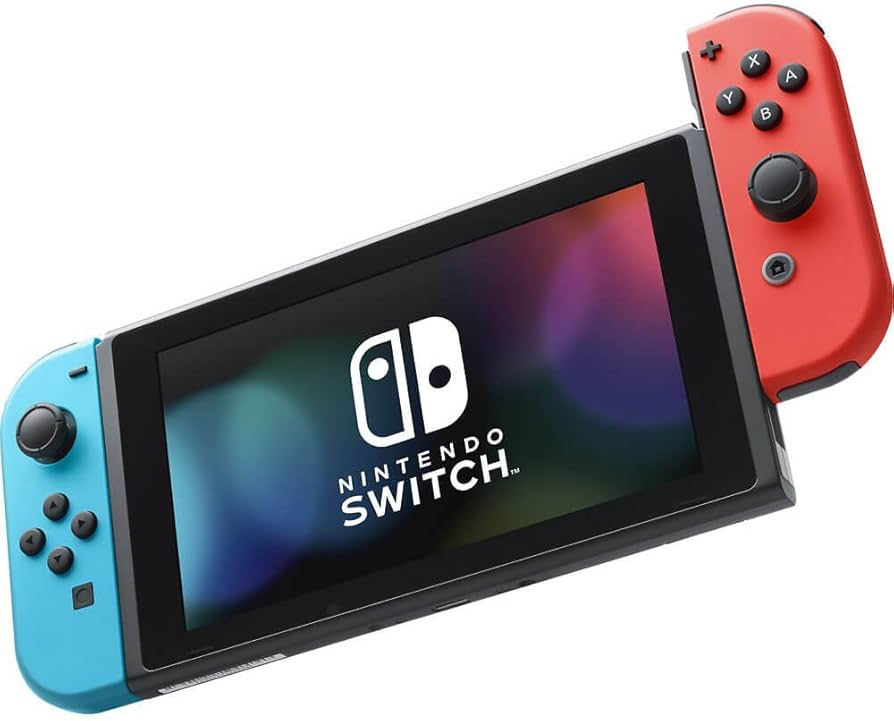
The Switch completely breaks this spatial tyranny through its form factor. The ability to instantly lift the device out of its television dock and transition to handheld mode completely alters the psychological context of play. It allows for what lifestyle analysts call “prostrate relaxation.” You can curl up on a couch, lean against a pile of pillows, or retreat entirely under the safety of a heavy bedroom blanket.
When you play a game in bed, the horizontal posture signals to your parasympathetic nervous system that the danger of the day has officially passed. The screen is small, intimate, and contained within the span of your arms.
You control the environment. There are no external notifications blinking from a workplace chat application, no hyper-intense audio arrays blasting through a soundbar, and no physical separation from your ultimate comfort zone. The hardware itself becomes an invitation to slow down, offering a physical posture of rest that a desktop PC or traditional home console can never replicate.
The Evolution of the Power Fantasy: From Conquest to Control
As our real-world responsibilities multiply, the themes we seek out in our entertainment naturally undergo a profound transformation.
When you are young and relatively powerless in the real world, the ultimate video game power fantasy is conquest. You want to be the chosen warrior wielding a six-foot sword, the elite space marine saving the galaxy from an alien invasion, or the mythical god slaughtering pantheons of monsters. You want to exert absolute, violent dominance over a hostile environment because it makes you feel powerful, capable, and important.
But when you are an adult who spent their entire afternoon arguing with an insurance company, managing a complex project budget, or folding infinite mountains of laundry, your relationship with chaos changes. The world outside your window already feels violent, unpredictable, and entirely out of your control. You don’t need a game to give you more chaos; you need a game that gives you order, predictability, and incremental progress.
This explains the staggering, ongoing commercial dominance of the “cozy gaming” phenomenon across the Switch library. According to recent data tracking digital storefront habits, the use of the word “cozy” as a primary tag and search descriptor has exploded by over 670% in recent years. Adults are deliberately abandoning the stressful blockbusters to play titles like Moonlight Peaks, Solarpunk, and old-reliable mainstays like Animal Crossing and Stardew Valley.
In these low-stakes environments, the gameplay loops are mathematically designed to soothe an anxious mind. Consider the mechanical structure of a modern farming or management simulator. You are handed a small, broken-down plot of land or a tiny, empty shop. The game gives you a clear, achievable set of tasks: clear three rocks, water four seeds, and organize your inventory layout. There are no sudden, catastrophic failures. If you forget to water your digital parsnips, they don’t permanently die and cause a game-over screen; they simply wait for you to try again tomorrow.
This creates a highly therapeutic dopamine delivery system. For every small action you take, the game immediately rewards you with a pleasant sound effect, a colorful visual animation, and a clear, visual indicator of tidy organizational progress. It provides the exact opposite experience of a real-world corporate job. In the virtual valley, your labor is directly connected to a clear, beautiful, and completely peaceful reward. You are not saving the world from an eldritch horror; you are creating a small, perfectly organized, and deeply safe corner within it.
Hand-Drawn Intimacy over Polished Sterility
There is also an aesthetic exhaustion contributing to the migration toward the Nintendo ecosystem. The pursuit of hyper-realistic, photorealistic graphics has inadvertently led the AAA sector into a visual monoculture. Massive studio titles all begin to look remarkably similar—vast, gray-and-brown post-apocalyptic landscapes filled with hyper-detailed skin textures, lifelike mud physics, and sterile, cinematic lighting that feels cold and emotionally detached.
The Switch, by virtue of its creative hardware limitations, has forced the development community to prioritize artistic style over raw computing power. It has become the absolute global sanctuary for the indie development scene, providing a stage for games that look like living illustrations, interactive watercolor paintings, or beautifully animated comic books.
When you load up a stylized, hand-drawn adventure title or an evocative narrative puzzle game on an OLED screen in a dark bedroom, the visual language hits your brain differently. The bright, deliberate color palettes, the charmingly stylized character designs, and the whimsical, melodic soundtracks act as a form of sensory restoration.
The abstraction of indie art styles allows the human brain to relax its analytical guard. You aren’t judging whether a shadow looks mathematically accurate or whether an explosion behaves according to real-world fluid dynamics. Instead, you are fully absorbing the emotional warmth, the creative wit, and the hand-crafted intimacy of the experience. It feels less like operating a complex piece of heavy multimedia software and more like turning the pages of a beloved, beautifully illustrated storybook before falling asleep.
The Micro-Dose Mechanics of Modern Play
The final, crucial element that secures the Switch’s status as an adult life raft is how it respects the fractured, precious nature of adult time. A traditional home console or PC gaming setup demands a massive investment of chronological capital before you even begin to have fun.
If you only have thirty minutes of free time before your eyelids grow heavy, booting up a massive, modern open-world RPG is logistically pointless. By the time the system boots, the mandatory digital rights management check clears, the lengthy loading screen finishes, and you navigate your character out of a sprawling menu system to the actual mission marker, half of your available free time has already expired. The barrier to entry is simply too high for a tired mind to overcome.
The Switch architecture eliminates this systemic friction entirely through its flawless “Sleep Mode” implementation. The device doesn’t require you to find a save point, sit through unskippable corporate logo screens, or manage tedious boot sequences. You press the physical power button once, and the hardware instantly goes to sleep, freezing the state of the software mid-frame. You press the button again three hours or three days later, and you are instantly right back in the exact spot you left, without a single millisecond of administrative overhead.
This allows adult gamers to “micro-dose” their hobbies around the tight constraints of their daily schedules. You can clear a single floor of a rogue-like deckbuilder while waiting for dinner to finish cooking. You can catch three fish and organize your storage chests while resting on the couch during a lunch break. You can play a single, brief level of a hand-drawn platformer in bed right before turning off the lights.
By lowering the mechanical friction of access to absolute zero, the console stops feeling like an imposing, demanding time commitment and transforms into a compliant, comforting companion that adapts entirely to the boundaries of your life.
The Return to Pure Play
The structural migration of adults away from the hyper-spec arms race and toward the portable embrace of Nintendo represents a profound cultural realization. It is the moment a generation collectively figured out that the value of a video game is not measured in teraflops, ray-tracing pipelines, or the realism of a digital character’s sweat. The true value of a video game is measured by how it makes you feel when the rest of the world is asking too much of you.
The Switch ecosystem succeeded because it stepped entirely off the corporate treadmill of stressful monetization and exhausting technological display. Instead, it handed us a lightweight, tactile device, pointed us toward cozy virtual farms, whimsical indie stories, and low-stress management loops, and gave us permission to lie down.
In a society that relentlessly demands our active attention, our constant productivity, and our emotional energy, the ability to crawl into bed, turn on a tiny screen, and spend an hour quietly tending a virtual garden is not just a casual hobby, it is a vital, beautiful act of psychological survival.