The Dangerous Rise of AI Voice Generation in Modding Communities

For decades, the video game modding community has operated as a vibrant, decentralized laboratory of pure fandom. It is a subculture driven by an incredible labor of love: amateur programmers, digital artists, and writers spending thousands of hours for free to fix broken mechanics, upgrade textures, and design entirely new levels for games long abandoned by their original developers.
If you look at the enduring lifespans of masterpieces like The Elder Scrolls V: Skyrim or The Witcher 3: Wild Hunt, their multi-decade relevance is directly credited to these community efforts. Modding was widely viewed as the ultimate, wholesome expression of player devotion.
But as we settle into 2026, a dark, deeply divisive technological shadow has fallen over this creative paradise. The rapid democratization of hyper-realistic generative AI voice tools has introduced a profound ethical crisis into the world of fan-generated content.
Amateur modders are no longer just building new castles or coding fresh spell animations; they are creating massive, DLC-sized story expansions featuring fully voiced dialogue from the games’ original characters. They are doing this not by hiring local actors, but by running a few minutes of official game audio through an AI synthesizer to clone the exact voices of prominent actors like Doug Cockle (Geralt of Rivia) or Laura Bailey.
The results are terrifyingly seamless. But beneath the thrill of playing a new, unofficial adventure lies a legal and moral minefield. By weaponizing synthetic voice generation without consent, attribution, or payment, the modding community has inadvertently sparked a critical battle over identity theft, intellectual property, and the very future of voice acting in interactive entertainment.
The Architecture of the Synthetic Voice Clone
To understand how quickly this technology has hijacked the modding landscape, one has to examine the technical evolution of fan-made quest lines. Historically, when a modder wanted to create a new story mission for an open-world RPG, they faced a severe creative bottleneck: the dialogue.
A modder could write a brilliant, emotionally gripping script for a new Skyrim quest, but they had only three deeply flawed options to execute it:
- The Silent Treatment: Force players to read static text boxes while the character stands frozen in a mute loop.
- The Recast: Hire an amateur voice actor off a platform like Fiverr, resulting in a jarring tonal disconnect that instantly breaks the player’s immersion.
- The Frankenstein Edit: Spend weeks meticulously cutting, splicing, and rearranging individual syllables from the original game’s audio files to piece together primitive, robotic-sounding new sentences.
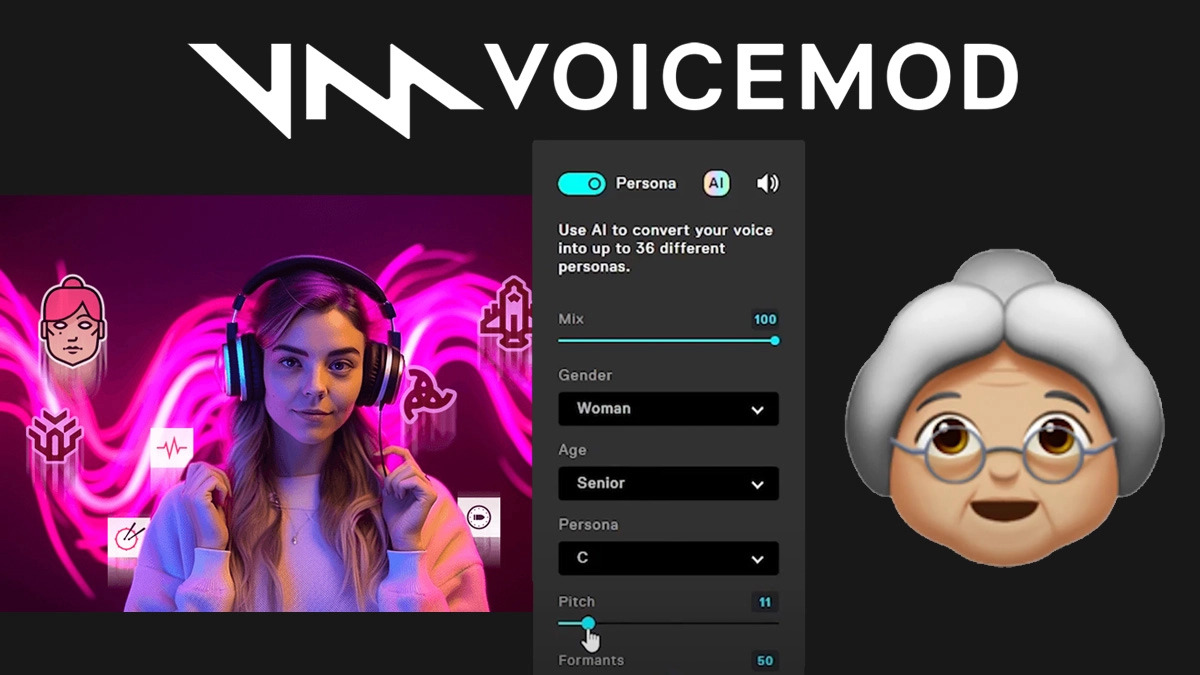
Generative AI voice platforms completely erased this bottleneck overnight. Today, tools require less than sixty seconds of clean audio data to map the unique biometric parameters of a human throat, accentuation, nasal resonance, and emotional cadence. Because video games are already digital repositories of clean, isolated voice lines, modders have access to a virtually infinite library of high-quality training data right inside the game files.
A modder can pull two hundred voice files of a specific character, feed them into a synthetic audio engine, and type out a massive, ten-thousand-word custom script. Within minutes, the software outputs a photorealistic, fully inflected audio track that sounds exactly like the professional voice actor.
The barrier to creating cinematic, fully voiced fan-fiction has been reduced to absolute zero. For the first time in history, a single hobbyist sitting in their bedroom can match the narrative production value of a multi-million-dollar game studio.
The Human Cost: Consent, Theft, and Career Erasure
While gamers on Reddit celebrate these massive mods as a triumph of free community content, the real-world human beings whose biometric data is being scraped view the trend with absolute horror. For a professional voice actor, their voice is not just a tool; it is their literal identity, their intellectual property, and their sole source of livelihood.
When a modding team releases a 30-hour expansion featuring a cloned voice, they are fundamentally committing non-consensual identity appropriation. The actor never read the script, never agreed to the narrative themes, and never gave permission for their biological likeness to be utilized in an external product.
There have already been high-profile controversies where AI-cloned voices were used by modders to make established, heroic video game characters utter graphic profanity, hate speech, or explicit adult content completely antithetical to the actor’s personal values and brand.
Beyond the reputational hazard, the economic threat is systemic. Professional voice actors survive on a delicate framework of residual payments, sequel contracts, and future casting calls.
If a publisher or a community can simply use an existing audio library to generate infinite new lines of dialogue for a character, the actor’s future economic value is systematically completely erased. Why would a studio pay a union rate to bring a legendary voice actor back into a studio for an expansion pack when the community has already proven that a software engine can generate the exact same performance for free?
The rise of AI voice cloning transforms the actor from a respected creative partner into a disposable data set, setting a dangerous precedent where a creative professional can be permanently replaced by the digital ghost of their own past work.
The Legal Gray Area: Fans vs. Intellectual Property
The legal battleground surrounding AI voice modding is exceptionally murky, operating in a lawless frontier that current copyright frameworks are completely unequipped to govern.
Under traditional intellectual property law, video game publishers like CD Projekt Red or Bethesda own the copyright to the literal audio files contained within the game, as well as the characters themselves. However, copyright law historically protects physical expressions of ideas—it does not explicitly protect a human being’s vocal timbre or biological resonance.
Modders often hide behind the classic defense of the fan-art exception. They argue that because their mods are distributed entirely for free on platforms like Nexus Mods, they are not generating a direct commercial profit, thus falling under the protective umbrella of “Fair Use.”
But this defense is a dangerous oversimplification. Even if a mod is free to download, it exists on hosting platforms that generate massive ad revenue, drive premium subscriptions, and elevate the digital profile of the creators. Furthermore, the act of distributing a synthetic audio clone using copyrighted data to train the AI neural network is a direct violation of standard End User License Agreements (EULAs).
As we move through 2026, the legal pressure is mounting. Landmark pieces of legislation such as the federal NO FAKES Act are winding their way through courtrooms, specifically aiming to establish a property right in an individual’s voice and likeness against digital replication.
Voice acting guilds and unions like SAG-AFTRA are aggressively updating standard contracts, explicitly forcing video game publishers to guarantee that an actor’s recorded lines will never be used to train synthetic neural networks without explicit, separate financial compensation. The wild-west era of free, unmonitored biometric cloning is rapidly closing in on an inevitable wall of structural litigation.
The Threat to Artistic Integrity and Nuance
Aside from the compounding ethical and legal issues, the widespread embrace of synthetic dialogue threatens to degrade the artistic soul of interactive storytelling. Voice acting is not a mechanical equation of reading text into a microphone; it is a highly sophisticated, deeply empathetic human art form.
When a professional actor stands inside a recording booth, they are bringing subtext, emotional vulnerability, and human spontaneity to the role. They understand how a subtle crack in a sentence can convey hidden grief, how a microscopic pause can signal betrayal, and how to dynamically adjust their delivery to match the underlying themes of a scene. They bounce their energy off the performance of their fellow actors, creating an organic, human chemistry.
AI voice generation, despite its breathtaking structural fidelity, remains fundamentally hollow beneath the surface glare. A machine cannot understand subtext because it does not understand human emotion. It simply analyzes statistical patterns of sound wave distribution and outputs a sanitized, mathematically calculated approximation of a sentence.
When you play a massive fan mod entirely voiced by AI, the initial novelty quickly gives way to a creeping sensation of artificial coldness. The dialogue feels flat, the emotional peaks feel unearned, and the cadence lacks the unpredictable, beautiful irregularities of a real human soul. By settling for synthetic convenience, the modding community risks turning our most beloved narrative universes into sterile, automated echo chambers.
Finding the Path Forward for Fan Creativity
The rise of AI voice generation in the modding scene represents a profound technological crossroads. The genie cannot be put back into the bottle; the tools are too accessible, the software is too powerful, and the desire for fully voiced fan content is too intense to be suppressed entirely by corporate cease-and-desist letters.
However, the current trajectory of uncompensated, non-consensual biometric cloning is completely unsustainable. If left unmonitored, it will permanently sever the relationship between the gaming community and the creative professionals who breathe life into our favorite worlds.
The path forward requires the modding community to evolve past the era of digital piracy and establish a brand-new ethical framework for fan-generated content:
- The Absolute Consent Mandate: Modding platforms must ban any project that utilizes an AI clone of an actor’s voice without a verified, documented release from the individual professional.
- Ethical AI Repositories: Communities must shift toward using ethically sourced, opt-in AI voice models where independent performers are compensated for lending their vocal profiles to open-source libraries.
- The Return to Human Collaboration: Modders must remember that the indie community is filled with incredibly talented, up-and-coming human voice actors who are eager to collaborate on community projects to build their personal portfolios.
Video game modding has always been a celebration of human creativity. It is an art form defined by community, collaboration, and a mutual respect for the worlds we share. To preserve that beautiful legacy, modders must resist the lazy allure of automated theft. The industry must find a way to draw a hard digital line, ensuring that as we build the massive, expansive virtual futures of our dreams, we do not build them on the hollow, stolen echoes of real human voices.