How Much Complex Lore Can a Television Audience Handle Before a Warhammer 40k Series Collapses?

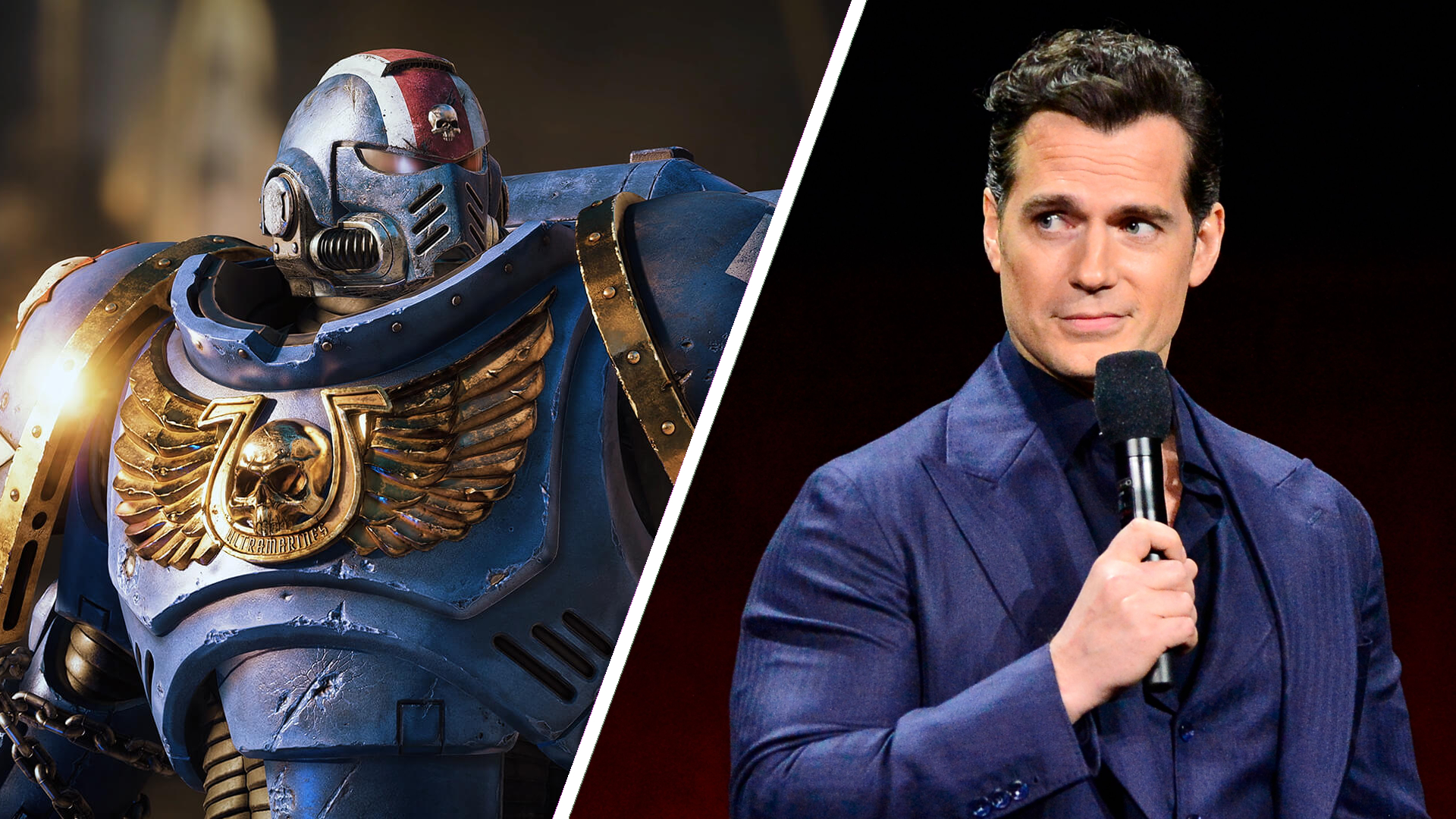
We are living in an era where Hollywood has finally learned to respect the narrative depth of video games, but the upcoming live-action Warhammer 40k cinematic universe at Amazon MGM Studios represents a completely different level of challenge. Executive producer and star Henry Cavill is currently locked in a highly publicized creative tug-of-war behind the scenes, fighting to protect the uncompromising, decades-old canon of Games Workshop’s flagship IP. But as the scriptwriters put ink to paper, they face a staggering structural wall.
Warhammer 40k is not just a popular sci-fi setting; it is arguably the most intricately bloated, aggressively dense fictional universe in human history. Born in 1987 as a tabletop wargame, its lore spans hundreds of Black Library novels, dozens of PC games, and a timeline that covers ten thousand years of continuous, galaxy-wide galactic war.
To make matters more complicated, this is a universe completely devoid of traditional heroes. The “protagonists” are the Imperium of Man: a rotting, fanatical, galaxy-spanning theocratic dictatorship that practices extreme xenophobia, lobotomizes criminals into cybernetic slaves, and worships a decaying corpse trapped on a golden life-support machine as a literal God.
They are fighting a multi-front war against soul-eating daemons from an alternate dimension of pure psychic chaos, swarms of bio-engineered aliens that consume entire planets down to the bedrock, and ancient robotic dynasties waking up to reclaim the galaxy.
It is a masterpiece of uncompromising “grimdark” storytelling. But it also raises a terrifying editorial question: How much of this dense, deeply bizarre mythology can a mainstream television audience actually process before the narrative completely collapses under its own weight?
The Informational Overload Threshold
The first major hurdle Amazon faces is the sheer volume of “mandatory reading” required just to understand a basic conflict in the 41st Millennium. In a standard science-fiction show like The Expanse or Star Trek, the world-building is introduced through relatable human frameworks. You have politicians, soldiers, and rebels. The stakes are physical, political, or territorial.
In Warhammer 40k, a simple conversation between two characters might casually reference the Warp (a hellish dimension of localized thought), the Adeptus Mechanicus (a cult of cyborgs who worship technology as a religion and believe computers have literal souls), and the psychic beacon of the Astronomican (which requires the literal sacrifice of one thousand human telepaths every single day just to keep spaceships from getting lost in hyperspace).
If a television series attempts to explain all of these concepts in the first two episodes via heavy-handed exposition dumps, it will alienate every single viewer who doesn’t already own a collection of painted plastic miniatures. The human brain can only absorb so many fictional proper nouns before it experiences narrative exhaustion.
If the audience has to pull up a fan wiki just to understand why a character is angry at an alien or terrified of a book, the emotional connection to the story is completely severed. The show becomes a dry history lecture dressed up in expensive visual effects, losing the visceral, pulse-pounding drama that makes the setting great.
The Scale Paradox: The Danger of Starting Too Large
The ultimate temptation for Amazon executives will be to lead with the franchise’s most iconic assets: the Space Marines. These hyper-indoctrinated, gene-altered, eight-foot-tall super-soldiers clad in massive power armor are the face of the brand. They look spectacular in CGI anthologies like Prime Video’s Secret Level, and pitching a show centered around giant warriors firing explosive bullet rounds at alien hordes is incredibly easy.
However, starting a long-form television series with the Space Marines is a structural trap. Space Marines are intentionally designed to be psychologically detached from the human experience. They do not feel fear, they do not have families, they do not participate in normal societal interactions, and their entire existence is dictated by fanatical, monastic devotion to a permanent state of war.
If the camera spends its time locked onto these post-human weapons, the audience has no emotional anchor. The scale of the universe loses its impact. A massive Tyranid alien monster doesn’t feel scary if it’s just fighting a giant armored demi-god; it looks like a standard superhero movie.
The only way to preserve the true horror and scale of Warhammer 40k is to start from a grounded, fragile human perspective. This is why many veteran lore analysts are begging Amazon to ignore the grand galactic battlefields at first and instead adapt the Eisenhorn series of novels.
Following Gregor Eisenhorn, an Imperial Inquisitor acting as a futuristic detective investigating hidden Chaos cults, political conspiracies, and heretical corruption on individual human worlds, provides a manageable, character-driven entry point. It allows the audience to explore the universe at a human scale.
We can see how ordinary citizens live under the crushing weight of the Imperium, making the sudden, rare appearance of a single Space Marine or a daemon feel like a world-shattering, terrifying event rather than a common visual trope.
The Moral Friction of a Universe Without Heroes
Beyond the logistical nightmare of explaining the history, Amazon faces a distinct cultural hurdle: the complete absence of a moral high ground. Mainstream television audiences are fundamentally conditioned to look for a heroic anchor—a group or individual fighting to make the world a better place. Even in prestige anti-hero dramas like Breaking Bad or Succession, there is a clear understanding of human vulnerability and a desire for redemption.
There is no redemption in Warhammer 40k. If the show faithfully depicts the Imperium of Man, it is showcasing a society that actively burn heretics at the stake, operates on absolute totalitarian control, and views individual human lives as entirely disposable fuel for a galactic war machine.
If the showrunners attempt to sanitize the Imperium to make them look like traditional, heroic “good guys” in space, they will fundamentally break the satirical, grimdark core of the IP, causing an immediate revolt from the core fanbase.
But if they present the setting with absolute fidelity, they risk deeply disturbing a casual viewing public that isn’t prepared to root for a regime of fanatical zealots. Navigating this moral friction requires an incredibly sophisticated tone. The series must position its main characters as individuals simply trying to survive inside an oppressive system, turning the focus away from ideological glory and toward the base, gritty reality of human endurance against cosmic horrors.
The Lore Filter and the Path to Success
To prevent a Warhammer 40k series from collapsing under the weight of its own world-building, Amazon must implement a strict “lore filter.” The showrunners must accept that they cannot tell the story of the entire galaxy all at once. They need to treat the mythology the same way Marvel Studios handled its early cinematic universe or how HBO handled George R.R. Martin’s A Song of Ice and Fire: introduce the world in concentrated, highly localized doses.
The audience does not need to know about the Horus Heresy, the structural division of the Chaos legions, or the intricate biology of the Eldar race in season one. They only need to understand the immediate, localized stakes of the characters on screen. The broader, sweeping lore should exist entirely as atmospheric world-building—whispers in the dark, ancient religious murals, and institutional paranoia that hints at a larger, terrifying reality waiting just beyond the horizon.
The stakes for Henry Cavill and Amazon are monumental. If they succumb to corporate panic and try to turn Warhammer 40k into a generic, mass-market space opera, they will end up with a hollow, forgettable project that satisfies no one.
But if they display structural reverence, limit their initial scope to a human perspective, and drip-feed the complex mythology through a tightly controlled narrative filter, they have the opportunity to deliver the most unique, breathtakingly epic science-fiction universe in the history of television. The key to conquering the 41st Millennium on screen is not showing the audience everything all at once, but rather making them terrified of what’s hiding in the spaces they can’t see.