The Shadows in Riyadh and the Silent Fire Burning Inside Cristiano Ronaldo After Messi’s Opening Strike

The narrative arc of modern football has always been dictated by an unspoken, terrifying synchronicity. For nearly two decades, whenever Lionel Messi painted a masterpiece on one side of the world, Cristiano Ronaldo would immediately respond by setting the canvas on fire on the other. They have spent their entire adult lives locked in a psychological mirror match, where the achievements of one automatically serve as an unyielding interrogation of the other.
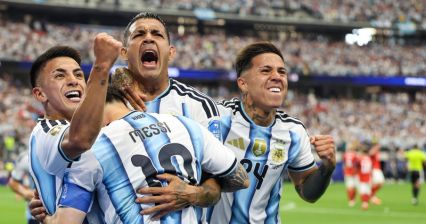
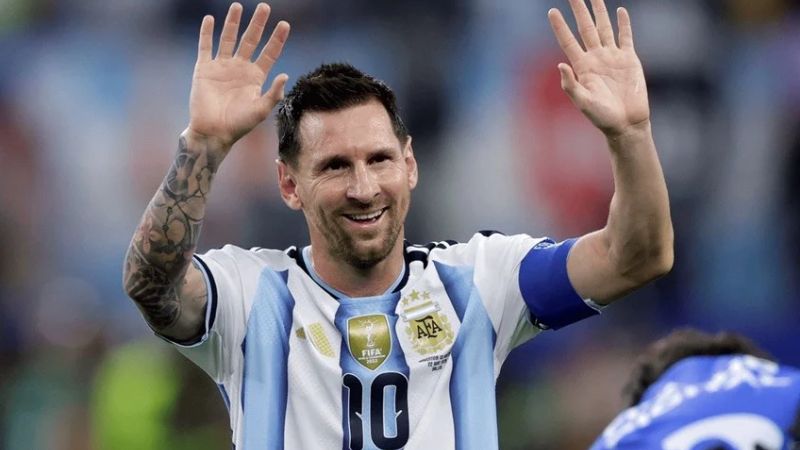
So, when Lionel Messi’s geometric 74th-minute masterstroke unlocked the opening match for Argentina at the FIFA World Cup 2026, the global media apparatus didn’t just erupt in celebration for the Albiceleste. Within milliseconds, the television cameras, social media algorithms, and analytical panels shifted their gaze to the shadows of the Portuguese camp, and more specifically, to the silence emanating from Riyadh.
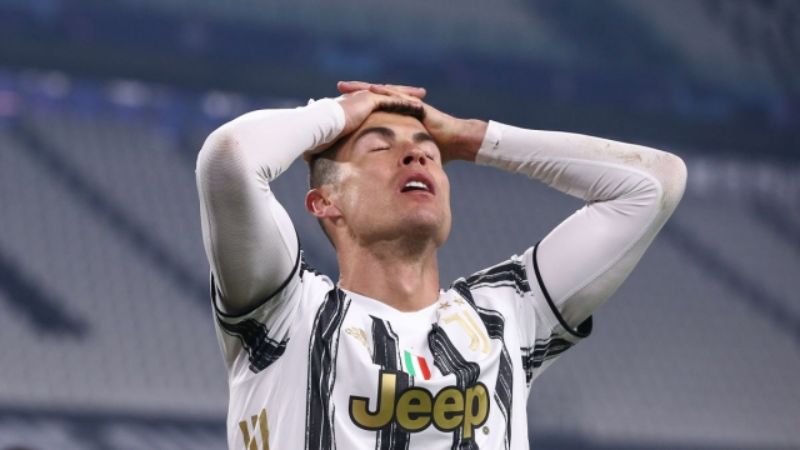
As Argentina takes its first triumphant step toward defending their crown, the footballing world finds itself asking a deeply polarizing question: How will Cristiano Ronaldo respond? Is the 41-year-old icon on the verge of a historic, legacy-defining counter-attack with Portugal, or are we witnessing the final, tragic gasps of a legendary warrior fighting a war against time that he cannot win?
Analyzing Ronaldo’s Recent Movements
While the world was busy dissecting Messi’s tactical role under Scaloni, Cristiano Ronaldo’s camp has adopted a fascinating, almost monastic strategy of radio silence.
In the weeks leading up to the tournament, Ronaldo’s usually hyper-active social media channels, which command the largest digital audience on earth, pivoted away from commercial brand endorsements and personal lifestyle flexes.
Instead, inside information leaking from his private compound in Saudi Arabia and the Portugal training base in North America suggests that Ronaldo has entered a state of extreme physical and psychological hyper-focus.
Reports indicate that Ronaldo has integrated advanced, military-grade recovery technology into his traveling entourage, including localized hyperbaric oxygen chambers and real-time neural mapping devices to monitor sleep latency and muscle firing rates. He is treating his 41-year-old body not as a veteran machine coasting on reputation, but as a fine-tuned aerodynamic prototype prepared for one final, violent sprint.
Those close to the Portuguese camp note that Ronaldo watched Messi’s opening goal in absolute isolation, refusing to join the collective viewing room with the younger squad members. For Ronaldo, Messi’s success isn’t just a football match; it is a direct, personal challenge. The silence coming from his camp is not a sign of defeat, it is the quiet before a calculated storm.
Roberto Martínez’s Beautiful, Volatile Dilemma
To predict whether Ronaldo can achieve a historic miraculous comeback in 2026, we must look past his individual hunger and analyze the cold, structural reality of the Portuguese national team. This is where the analysis becomes multi-dimensional and fiercely complicated.
Portugal’s manager, Roberto Martínez, possesses an embarrassment of riches. The current Portuguese squad is widely considered the most mechanically fluid, hyper-talented generation since the Golden Era of Figo and Rui Costa.
Players like Rafael Leão, Bernardo Silva, Bruno Fernandes, and Gonçalo Ramos are built for the modern, high-pressing, transitional style of football. They thrive on rapid position-swapping, vertical intensity, and collective defensive pressing.
When Ronaldo is inserted into the starting lineup, that tactical fluidity inherently halts. At 41, Ronaldo can no longer press for 90 minutes; he cannot track back into the defensive third to assist his full-backs. He has evolved into a pure, predatory penalty-box specialist.
This creates a fascinating tactical friction:
- The Case for the Comeback: Ronaldo’s positioning and movement inside the eighteen-yard box remain completely unparalleled in the history of the sport. In a tightly contested knockout match where space is non-existent, Ronaldo does not need to run 10 kilometers to win a game. He needs one cross, one half-chance, or one defensive lapse to alter football history. If Portugal accepts a system where they carry his defensive weight to unleash his lethal positioning, he is entirely capable of a legendary tournament.
- The Case for Tragedy: If Martínez starts Ronaldo purely out of historical reverence and political pressure, he risks suffocating the creative instincts of Bruno Fernandes and slowing down the lightning-fast transitions of Rafael Leão. If Ronaldo fails to score in the opening group stage matches, the media circus surrounding his starting status could easily fracture the locker room, replicating the dramatic collapse seen in Qatar 2022.
The Quest to Rewrite the Final Chapter
The ultimate factor that will dictate Ronaldo’s destiny in 2026 is his relationship with his own mortality. Lionel Messi’s opening goal has effectively stripped Ronaldo of his safety net. If Ronaldo exits this tournament quietly, either as a benched superstar or as a frustrated forward struggling against elite, physical defenses, the eternal debate will be closed permanently by the public consciousness.
Ronaldo is acutely, obsessively aware of this. This is a man who built an entire empire on the foundation of defying odds and proving doubters wrong. The narrative of Messi winning in 2022 and starting strong in 2026 provides Ronaldo with the ultimate, toxic fuel.
He doesn’t just want to win the World Cup; he wants to achieve something so statistically absurd, becoming the oldest goalscorer and the only player to score in six different World Cups, that it completely disrupts Messi’s narrative monopoly.
A Super-Sub Savior or an Obstinate King?
When you balance the tactical data against the sheer, unyielding force of Ronaldo’s willpower, the prediction for his 2026 campaign lands on a radical, highly unconventional perspective.
Cristiano Ronaldo will make history in this tournament, but it will not happen through the traditional path he desires. His true miracle will occur when he embraces the ultimate sacrifice: becoming the most lethal Super-Sub in international football history.
If Ronaldo insists on starting every match and playing 90 minutes, the physical demands of the 2026 North American summer will break his efficiency and stall Portugal’s young engine. But if Roberto Martínez can successfully convince Ronaldo to unlock his ego, the results could be terrifying.
Imagine a scenario in the 70th minute of a World Cup knockout match, with the score tied at 0-0. The opposing defenders are exhausted, their legs heavy from chasing Leão and Bernardo Silva for over an hour. Suddenly, the fourth official lifts the board, and a fresh, hyper-motivated, vengeful Cristiano Ronaldo steps onto the pitch.
In that specific, high-drama ecosystem, Ronaldo is still the most dangerous entity on earth. That is how the historic comeback is written. Not by clinging onto the ghost of his twenty-year-old self, but by mastering the absolute economy of the big moment.
The stage is set, his rival has thrown down the gauntlet, and the world is holding its breath to see if the King of Madrid can orchestrate one final, cataclysmic plot twist.