The Last Dance or a Farewell Illusion and the Bitter Reality of Messi and Ronaldo for the 2026 World Cup

Football has always been a sport hopelessly addicted to romanticism. We crave the cinematic finale; we demand that our heroes ride off into the sunset draped in gold and glory.
But as the countdown clocks tick down toward the opening match of the 2026 World Cup across North America, the footballing world finds itself caught in a collective, anxious state of limbo. The shadow of the greatest individual rivalry in sports history still hangs heavily over the tournament.
Everyone is asking the exact same question: Will Lionel Messi and Cristiano Ronaldo actually lace up their boots for one final, unimaginable World Cup run, or are we simply chasing a marketing ghost?
To analyze the probability of their participation isn’t just a matter of checking squad depth or reading polite press release statements. It requires a cold, clinical look at biological reality, political leverage within their respective national teams, and the vastly different psychological scars left behind by the tectonic shift of Qatar 2022.
The Qatar Catalyst and the Divergent Paths of Immortality
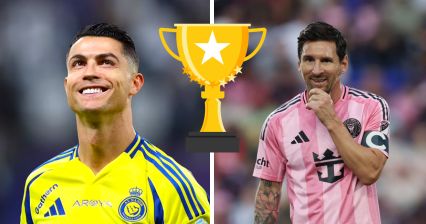
To understand where these two titans stand today, you have to rewind the tape to the winter of 2022. The tournament in Qatar was billed as the definitive, ultimate closing chapter of their decade-long war for supremacy. Instead of a shared exit, it created the most brutal narrative divergence the sport has ever seen.
For Lionel Messi, Qatar was the ultimate deification. By dragging Argentina to the trophy in a breathless, hyper-dramatic final against France, Messi did something far more profound than just winning a medal, he achieved total psychological liberation. The heavy, suffocating pressure of matching Diego Maradona’s ghost vanished overnight.
When you watch Messi play now, you are watching a man who has completed the video game of football. He plays with a loose, smiling, almost detached joy.
Cristiano Ronaldo’s Qatari experience, however, was a masterclass in Shakespearean tragedy. Benched by Fernando Santos during the knockout stages, watching his bitter rival lift the golden trophy while he wept down the tunnel after a shocking quarter-final exit to Morocco, it was a visceral, public humiliation.
For a man obsessed with being the undisputed number one, Qatar left a gaping, unhealed wound. It is this exact psychological trauma that drives Ronaldo today. He does not just want to play in 2026; he needs to play in 2026 to overwrite the final chapter of his legacy.
Lionel Messi and the Strategic Conservation of Energy
Let’s break down the tactical and physical reality of Lionel Messi. At 38 years old, Messi is operating under a highly sophisticated, meticulously calculated blueprint designed to preserve his body for short, high-intensity bursts. His move to Inter Miami in Major League Soccer was not an early retirement; it was a cold-blooded lifestyle and athletic pivot.
By stepping away from the grueling, weekly physical meat-grinder of European club football, Messi has successfully managed his chronic hamstring and muscular issues. In the MLS, he is allowed to walk, to conserve energy, and to pick his moments of genius without facing the hyper-aggressive, high-pressing defensive blocks of the UEFA Champions League.
But the real secret to Messi’s potential 2026 participation lies in his relationship with Argentina’s manager, Lionel Scaloni. Scaloni has built a tactical ecosystem that is entirely “Messi-proof.” Argentina does not require Messi to defend, to track back, or even to run for 90 minutes.
The midfield engine room, manned by tireless workhorses like Alexis Mac Allister and Rodrigo De Paul, exists solely to do the dirty work, allowing Messi to occupy the space of a lethal, deep-lying playmaker.
If Messi stands on the pitch in 2026, he will not be the explosive winger of Barcelona lore. He will be a tactical chess grandmaster, distributing lethal passes and taking free-kicks. The decision for Messi is entirely psychological: does he still possess the competitive hunger to leave his comfortable Miami bubble and subject himself to the intense media circus of a month-long tournament?
Cristiano Ronaldo and the Defiance of Biological Time
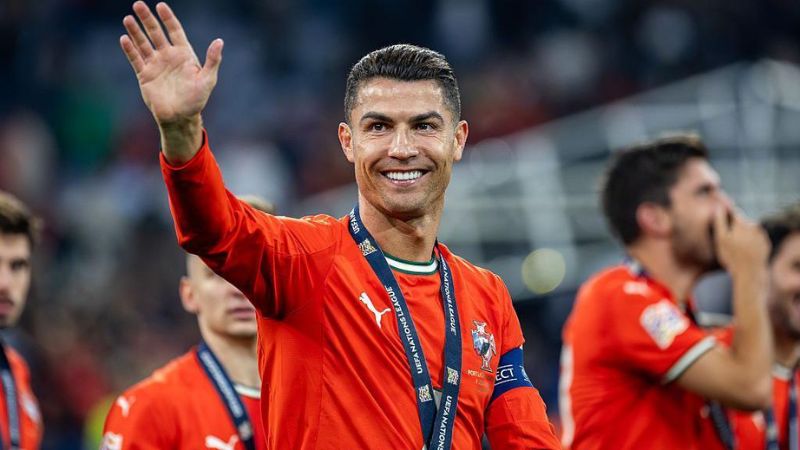
If Messi’s approach to 2026 is based on tactical conservation, Cristiano Ronaldo’s approach is a declaration of war against Father Time himself. Turning 41 years old is an age where elite outfield footballers have long transitioned into television punditry or management. Yet, Ronaldo remains a physical anomaly, a product of two decades of obsessive, borderline psychopathic dedication to sports science, cryotherapy, and strict nutrition.
Ronaldo’s move to Al-Nassr in the Saudi Pro League provided him with a similar sanctuary to Messi’s MLS transition, a lower-intensity league where he can maintain a staggering goal-scoring output without destroying his joints. But unlike Messi, Ronaldo’s presence within his national team is a highly volatile, polarizing political topic in Lisbon.
Under Roberto Martínez, Portugal boasts one of the most terrifyingly deep, hyper-talented generations of attacking players in the world, featuring Bruno Fernandes, Rafael Leão, and Bernardo Silva.
Tactically, a modern international team requires high-pressing, fluid movement, and defensive tracking from its forward line. When Ronaldo plays, Portugal is forced to adapt to a rigid, centralized focal point. He is no longer the dynamic force that can bypass three defenders with a stepover; he is a pure, elite penalty-box poacher.
The dilemma for Portugal is immense. Ronaldo commands such massive cultural and political gravity within the country that benching him creates a national media crisis. If he goes to North America, it will not be to sit politely on the bench as an elder statesman. Ronaldo will demand to start, to take every penalty, and to be the main event. It is a high-stakes gamble that could either unite the squad or fracture it entirely under the intense pressure of a World Cup.
The Commercial Puppet Masters Pulling the Strings
While purists love to debate tactics, fitness, and legacy, we cannot ignore the monstrous commercial apparatus driving this narrative. A World Cup hosted simultaneously by the United States, Mexico, and Canada is projected to be the most lucrative sporting event in human history. Corporate sponsors, television networks, and FIFA itself are acutely aware that a tournament featuring both
The American sports marketing machine is already heavily intertwined with Messi’s image. For Ronaldo, a return to the Western spotlight for a major tournament represents the ultimate brand redemption arc. The corporate pressure on both players to make themselves available, even if just to be named in the 26-man squads as legendary super-subs, is immense.
The Final Verdict: Reality Over Romance
When you strip away the emotional nostalgia and look at the cold facts, the probability of seeing both names on the team sheets splits down two very distinct paths.
For Lionel Messi, the 2026 World Cup feels like a calculated luxury. He has already won the game; he owes his country, his fans, and his legacy absolutely nothing. If his body feels fresh and the tournament feels like a fun challenge rather than a chore, he will be there—not out of desperation, but out of sheer love for the camp camaraderie. He has nothing left to prove, which ironically makes him the most dangerous player on earth.
For Cristiano Ronaldo, the 2026 World Cup is a relentless obsession. It is the final, desperate mountain he must climb to erase the bitter memories of Qatar and achieve a statistical feat, playing in six different World Cups, that would cement his name in the record books forever. He will drag his body across the finish line through sheer force of will, regardless of whether it fits Portugal’s tactical evolution or not.
The beautiful, terrifying truth of the 2026 World Cup is that we are likely witnessing the absolute twilight of an era. Whether they step onto the pitch as dominant starters or as mythic figures coming off the bench to rescue a match in the 80th minute, their presence alone changes the entire atmospheric pressure of the tournament. The world is waiting, the stages are set, and the final script has yet to be written.