The Quiet Luxury of the Court and the Discretely Wealthy World of Modern Polo

If you look at the mainstream landscape of sports entertainment in 2026, it is an industry that screams for your attention. Stadiums are wrapped in blinding LED screens, jerseys are plastered with corporate crypto sponsorships, and athletes communicate with their fanbases through carefully staged TikTok videos. Everything is designed to be loud, democratic, and immediately monetizable. It is high-octane entertainment built for the algorithmic age.
But if you move away from the roaring arenas and step into the fiercely guarded, generational enclaves of the true global elite, the world of Old Money, the relationship with sports changes entirely. Here, wealth does not flash; it whispers.
The global upper crust does not congregate at flashy, over-hyped stadium VIP boxes. Instead, they retreat to the sprawling, manicured grass lawns of private country clubs, where sports are played not for social media metrics, but as a preservation of heritage, legacy, and exclusive social networks.
While tennis and sailing certainly maintain their high-society allure, there is one singular sport that stands as the undisputed apex of the Old Money lifestyle: Polo. Often referred to as the Sport of Kings, polo in 2026 remains the ultimate playground for the discretely wealthy, a world where extreme athleticism meets the quiet luxury of generational wealth.
The Unspoken Codes of the Polo Paddock
To understand why polo is the definitive sport of the Old Money aesthetic, you have to look past the game itself and analyze the subculture surrounding the field. Unlike sports that require ticket master queues and security checkpoints, entering a premier polo match feels like stepping into a private, sun-drenched garden party where everyone has known each other’s families for three generations.
Look no further than the Guards Polo Club in Windsor Great Park, England, or the International Polo Club in Palm Beach, Florida. At these historic venues, the dress code completely ignores the logos and fast-fashion trends of modern luxury.
You will not see oversized streetwear or flashy designer brand names. Instead, the sidelines are a masterclass in quiet luxury – tailored linen suits, bespoke leather riding boots, vintage Rolex timepieces passed down from grandfathers, and handmade straw fedoras.
The sport acts as a natural, highly effective filter for the global elite. Because owning, breeding, and transporting a string of elite polo ponies requires an astronomical financial commitment that runs into the millions of dollars annually, the sport is structurally protected from the commercial over-saturation that has diluted other sports.
It is an environment built on an unspoken code of conduct: a mutual understanding of privilege, a shared appreciation for equestrian mastery, and a complete aversion to looking like you are trying too hard to impress.
Inside the Multi-Million Dollar String
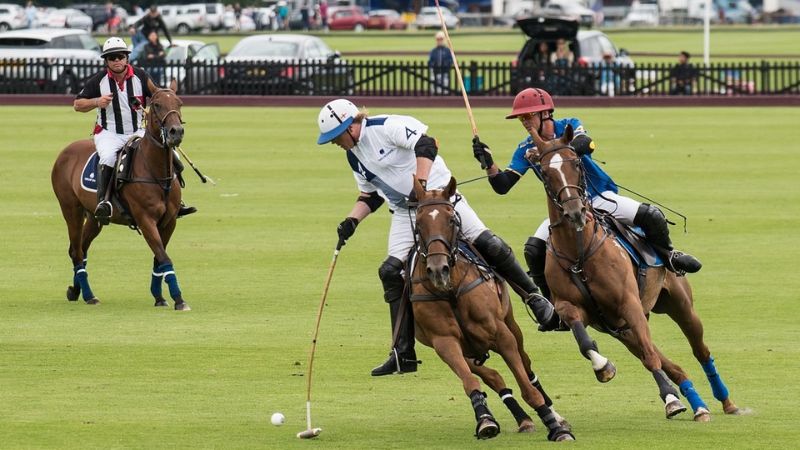
The fresh, often misunderstood perspective on polo is that the human rider is only half of the equation. In the high-stakes world of modern polo, the true currency of status is the horses, collectively known as a player’s “string.” A high-goal polo player requires a minimum of six to ten horses per match, switching them out after each intensive seven-minute period, known as a chukker
The engineering and breeding behind these animals make a Formula 1 racing garage look remarkably simple. These are not standard horses; they are “Polo Ponies”, primarily a hyper-specific crossbreed of thoroughbreds and local Argentine ranch horses, bred for explosive short-burst acceleration, the agility to turn on a dime, and the bravery to collide with other horses at 30 miles per hour.
The current pinnacle of this high-society sport is dominated by legendary, generational figures like Adolfo Cambiaso, widely considered the greatest polo player in human history. Cambiaso didn’t just master the sport; he revolutionized the Old Money asset landscape by introducing genetic cloning to the polo world. Today, the world’s wealthiest patrons spend hundreds of thousands of dollars to purchase clones of his legendary mare, Dolfina Cuartetera
When you see a multi-billionaire tech heir or a European aristocrat stepping onto the field, their status isn’t determined by a flashy supercar in the parking lot. It is determined by the pristine genetic lineage of the horses tethered in their private tents. It is a flex that only those within the inner circle can truly decipher.
The Next Generation of Polo Royalty
While polo is deeply rooted in history, the sport is experiencing a vibrant, highly sophisticated youthful renaissance in 2026. The new generation of players entering the high-goal circuits are seamlessly blending their aristocratic heritages with contemporary global lifestyle branding.
Look at Nacho Figueras, the face of Ralph Lauren Black Label and an elite polo player who has successfully bridged the gap between the insular world of high-goal polo and global pop culture. Figueras, alongside his son Hilario Figueras
This new generation has turned polo into the ultimate global networking hub. The matches serve as a casual, low-pressure sanctuary where international shipping magnates, European royalty, and Silicon Valley founders can mingle over champagne during the traditional divot stomping, a centuries-old mid-game ritual where spectators walk onto the field to flip over the pieces of turf kicked up by the horses’ hooves. It is networking disguised as leisure, where multi-million dollar venture capital deals are shaken on while casually holding a polo mallet.
Why the Old Money Aesthetic Will Never Outgrow the Sport
Ultimately, the global obsession with the Old Money aesthetic proves that in an increasingly digital, hyper-accelerated world, human beings are deeply starved for tradition, craftsmanship, and unhurried elegance.
Polo cannot be automated, it cannot be simulated in a virtual reality headset, and it cannot be faked through clever marketing. It requires years of physical discipline, an intimate connection with an animal, and access to land and capital that takes lifetimes to accumulate.
As long as the global elite look for ways to retreat from the noisy, transactional reality of mainstream culture, the pristine green polo fields of Windsor, Wellington, and Buenos Aires will remain completely untouchable.
The sport will continue to serve as the definitive, ultimate sanctuary for quiet luxury, a beautiful, timeless theater where the elite can step away from the cameras, connect with their heritage, and enjoy the effortless elegance of the game.