The Replicated Cup and the Generational Legacy of the Fernandes Family Across the FIFA World Cup

The history of the FIFA World Cup is routinely documented through the lens of institutional metrics: television broadcasting revenues, stadium capacity infrastructure, and the statistical achievements of elite athletes. However, the emotional architecture of the tournament is frequently anchored by figures completely detached from the official team sheets.
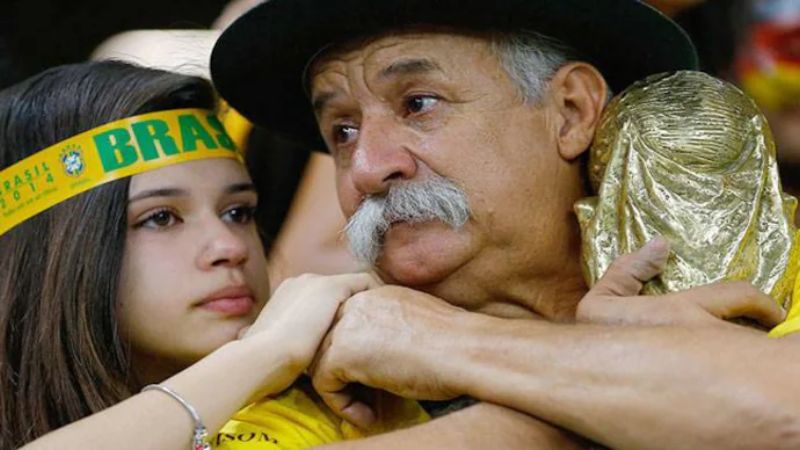
Among the most iconic non-playing personalities in football history was Clóvis Acosta Fernandes, widely recognized by global media as the Gaucho da Copa. For nearly three decades, Fernandes operated as Brazil’s undisputed global ambassador of fandom, traveling with a distinctive replica of the FIFA World Cup trophy.
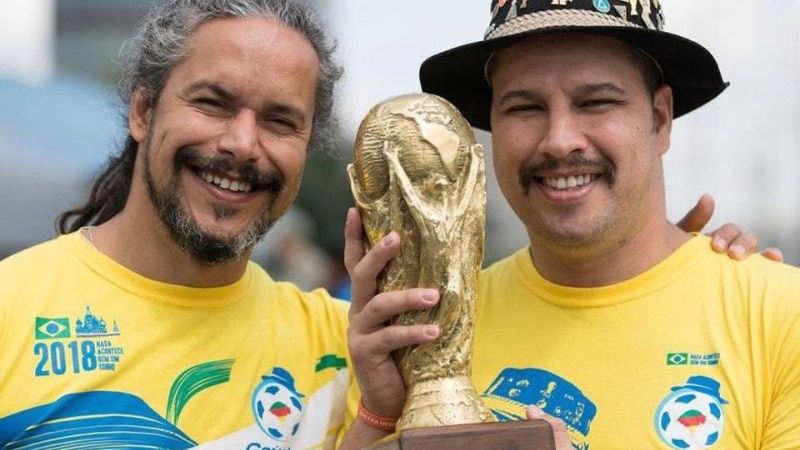
Following his death in 2015, the international footballing community assumed that one of the most visible traditions in sports history had concluded. But as the 2026 World Cup progresses across North America, the familiar golden trophy has re-emerged in the stadiums, carried by his sons, Frank and Gustavo Fernandes.
The continuation of this journey provides a highly disciplined, multi-generational case study in sports sociology and the institutional preservation of familial legacy.
The Genesis of the Gaucho: Seven Tournaments of Absolute Faith
The operational footprint of Clóvis Acosta Fernandes began during the 1990 World Cup in Italy. A former pizza restaurant owner from Porto Alegre, Fernandes made the radical executive decision to sell his business assets to finance his initial international tournament journey.
Clad in traditional Rio Grande do Sul attire, including a wide-brimmed hat, neck scarfs, and custom leather boots, Fernandes transformed himself from a standard spectator into a highly calculated cultural entity.
Between 1990 and 2014, Fernandes systematically logged attendance at seven consecutive World Cups, visiting over 60 countries and witnessing more than 150 live matches involving the Brazilian national team. His structural visibility on international broadcasts made him a primary marketing asset for FIFA’s global tournament imagery.
The definitive turning point in his global narrative occurred during the 2014 semifinal in Belo Horizonte, where Brazil suffered a catastrophic 7-1 defeat against Germany.
The international television broadcast captured a close-up image of a weeping Fernandes clinging tightly to his replica trophy – a single, unvarnished frame that AP and Reuters instantly syndicating as the definitive, tragic symbol of Brazilian footballing grief. Yet, in a post-match gesture that defined his international reputation, Fernandes handed the replica cup to a German supporter, stating that the opposition thoroughly deserved to carry it forward.
The Generational Handoff
When Clóvis Acosta Fernandes succumbed to cancer in September 2015 at the age of 60, the global press treated his passing as the definitive end of an era.
However, inside the Fernandes household in Porto Alegre, plans were already being mapped out by his sons, Frank and Gustavo, to ensure the physical continuity of the asset. The brothers officially inherited the iconic replica trophy, alongside the responsibility of maintaining their father’s exhaustive travel schedule.
The logistical execution of following the Seleção across the 2018 tournament in Russia and the 2022 winter cycle in Qatar required strict financial planning and independent sponsorship procurement. The 2026 expansion, featuring 48 teams scattered across the vast geographic expanses of the United States, Mexico, and Canada, presents the most severe administrative challenge the family has encountered since 1990.
Navigating cross-border visa protocols, fluctuating domestic flight logistics between high-altitude Mexican venues and coastal American arenas, and the skyrocketing costs of corporate tournament accommodation requires a level of project management comparable to a corporate sports agency.
The brothers do not view this as a casual holiday; it is an organized, high-stakes tribute to familial memory. They wear the exact traditional Gaucho attire, carry the exact same dented, historic replica cup, and intentionally position themselves in the front rows of stadium stands to catch the broadcast cameras, preserving the precise visual footprint established by their father thirty-six years prior.
The Sociological Analysis of Eternal Fandom
From an analytical standpoint, the Fernandes family’s multi-generational campaign provides profound insight into the mechanics of modern sports culture. For Frank and Gustavo, the tournament is no longer an exercise in pure athletic entertainment. The ninety minutes of football played on the pitch have become secondary to the ritualistic acts of memory preservation and cultural exchange.
When the brothers walk through the stadium concourses in 2026, they are routinely swarmed by older football enthusiasts from Germany, Argentina, and Italy who instantly recognize the trophy and the attire.
This cross-generational recognition functions as a powerful, living archive of the sport’s history. It proves that within the hyper-monetized, corporate-driven landscape of modern sports, true cultural permanence is often driven by the unyielding dedication of ordinary families.
The replica cup is no longer just a piece of painted gold plastic; it has transitioned into a sacred heirloom, a physical vessel carrying the collective memories of a father, a family, and a nation’s complex relationship with the beautiful game.
The Future of the Golden Legacy
As the 2026 tournament matches toward its highly anticipated knockout stages, the presence of the Fernandes brothers serves as a stark, comforting reminder of the enduring structural traditions of the World Cup. Coaches change, elite players retire to pursue commercial endeavors, and stadium designs evolve, but the core human desire to connect across generations through a shared athletic obsession remains completely uncompromised.
The narrative of the Gaucho da Copa has successfully outlived its creator. Through the absolute commitment of Frank and Gustavo, the legacy of Clóvis Acosta Fernandes continues to breathe inside the stadiums of North America.
They have ensured that as long as a Brazilian national team steps onto a World Cup pitch, the iconic golden cup will always be held aloft in the stands, a timeless symbol of paternal love, generational continuity, and a family’s eternal faith in the sport.